
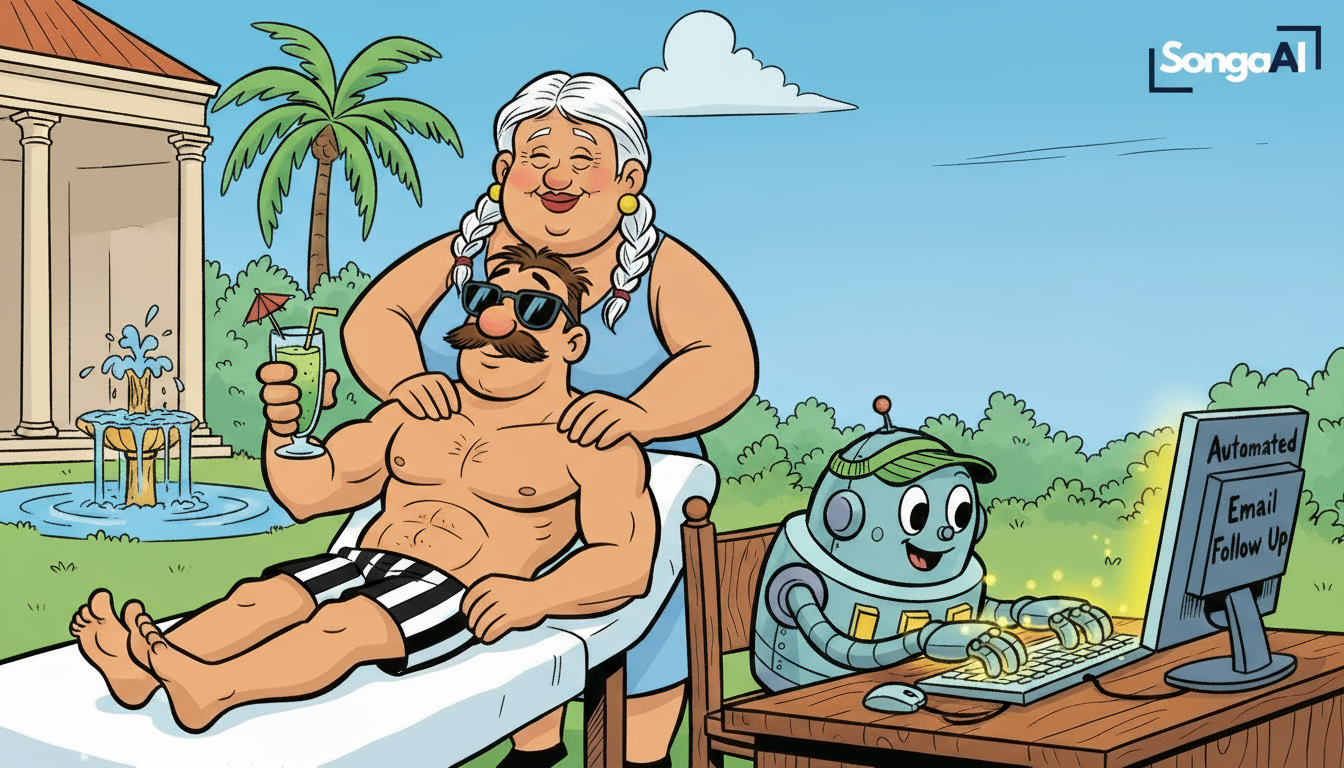
Automated email follow up is one of the simplest ways to stop losing leads before you ever get the chance to talk to them.
Here’s a surprising truth: most businesses don’t lose leads because of bad offers — they lose them because nobody remembers to follow up.
Let’s be honest: the slowest part of running a business is waiting for someone else’s inbox.
You send the perfect email. You attach the polished proposal. You press send, feel great for a moment… and then? Silence.
Hours turn into days. You start wondering: Did they see it? Did they forget? Should I follow up? Am I being too persistent?
Meanwhile, your task list grows, the lead sinks deeper into inbox limbo, and another opportunity quietly slips through the cracks.
Sound familiar?
If you’ve read my guides on Workflow Automation for Small Business or No-Code Automation Examples, you already know: most bottlenecks in business aren’t caused by strategy — but by delay. And nothing delays growth quite like slow, inconsistent follow-up.
Here’s the truth no one likes to say out loud: most deals don’t close on the first touchpoint.
Research shows it takes 5–8 interactions before someone says yes — but hardly anyone has the bandwidth to keep up with that manually.
That’s where automated email follow up steps in.
It’s the system that remembers, nudges, and keeps conversations alive — even when you’re busy focusing on meaningful work, client delivery, or actually enjoying your weekend.
What Exactly Is Automated Email Follow Up?
Think of automated email follow up as a tiny digital teammate who never forgets to follow up.
You send a proposal or an important message → your automation tool starts listening.
If there’s no reply within your ideal window, a friendly, personalized follow up goes out automatically.
No spreadsheets.
No “I forgot to reply!” panic.
No mental load.
GoHighLevel keeps the entire follow-up rhythm for you — while you’re deep in client work, traveling, or enjoying your weekend. And because GHL lets you personalize every message with dynamic fields, custom conditions, and reply tracking, each follow up still feels human, intentional, and on-brand.
Your business shows up consistently — without you manually logging into your inbox 20 times a day.
Why Automated Email Follow Up Changes Everything
1. Your Prospects Actually Need the Reminder
People aren’t ignoring you — they’re overwhelmed.
Their inbox is a jungle of newsletters, invoices, notifications, promotions, and messages they “meant to get back to.”
Your carefully written email likely slipped between three calendar invites and a “50% off winter sale.”
Automated email follow up puts your message back in front of them at the moment they finally have mental space.
A well-timed nudge feels like:
“Hey, just bringing this back to the top of your inbox in case it slipped through.”
When timing meets attention, response rates jump — often by 20–40%.
2. Automated Email Follow Up Saves You Hours Every Week
Manual follow up is one of the biggest invisible time drains in business.
You check reply threads.
Draft variations of “just circling back.”
Set reminders.
Forget reminders.
Scroll through a 14-message chain trying to remember context.
The cognitive load is brutal.
Automated email follow up eliminates all of it.
Your system:
- tracks who hasn’t replied
- waits the ideal number of days
- sends the perfect message
- removes contacts once they respond
- updates your pipeline automatically
You don’t just save time —
you reclaim your headspace.
Across most businesses I’ve worked with, automating proposal follow ups consistently frees up several hours per week — time that can be reinvested into client delivery, sales calls, or strategic work.
3. Conversion Rates Increase Dramatically
Most deals don’t fall through because prospects aren’t interested.
They fall through because momentum fades.
Automated email follow up keeps conversations warm.
By consistently showing up, you:
- stay visible
- reduce friction
- keep the decision alive
- stay top-of-mind when priorities shift
When your system continues until the lead responds, people naturally re-engage when the timing finally fits.
This alone turns “ghosted” prospects into booked calls and signed contracts.
4. You Look More Reliable and Professional
Consistency signals competence.
A business that follows up on time, every time, feels:
- organized
- trustworthy
- dependable
- structured
When your follow ups arrive like clockwork — warm, friendly, and on-brand — prospects feel cared for before the first call even happens.
This level of reliability builds trust fast.
And trust is what truly closes deals.
Automated email follow up makes you look like a company that has its operations tight, even if you’re a one-person powerhous
How Automated Email Follow Up Works
Let’s break down what actually happens inside a high-performing automated email follow up sequence.
Step 1: The Trigger Starts Everything
Your system needs a starting signal. Common triggers include:
- A proposal or quote sent
- A form submission
- A new contact entering your CRM
- A lead going quiet for X days
- A resource download
- A meeting completed
- A client reaching a pipeline stage
This is similar to the workflow logic behind Automated Appointment Reminders — only now, the trigger launches a follow-up nurture instead of a reminder sequence.
Step 2: The Timing (Your Secret Weapon)
Great automated email follow up is never random.
Your system waits strategically:
- 2–3 days after sending a proposal
- 24 hours after a discovery call
- 5–7 days for warm leads
- 10–14 days for cold lead re-engagement
Natural. Respectful. Effective.
The timing alone increases response rates by 30–60%.
Step 3: The Personalization Layer
This is where automated email follow up stops being “automation” and starts feeling human.
Tools like GoHighLevel + OpenAI let you:
- Include the person’s name
- Reference previous messages
- Insert relevant links
- Match tone to engagement
- Provide value (resources, FAQs, next steps)
That’s why automated email follow up works:
It feels like you — on your best day — showing up consistently.
Step 4: The Sequence Itself
A great automated email follow up sequence is persistent without pressure:
Day 2: Quick check-in — “Did you see my email?”
Day 5: Friendly nudge — “Happy to answer any questions.”
Day 10: Permission-based follow up — “If now isn’t the right time, no worries.”
Day 14: Light value add — a resource, testimonial, or case study.
Optional (for longer sales cycles):
Day 21–30: Soft re-engagement — “Things change — still here if you need support.”
Step 5: The Back-End Magic
While your sequence runs, your system handles the admin:
- Logging replies
- Updating the CRM
- Tagging based on engagement
- Removing contacts once they reply
- Notifying you about hot leads
- Moving contacts between pipeline stages
That’s how automated email follow up saves you time, cleans your pipeline, and increases deal velocity.
Real-World Scenarios Where Automated Email Follow Up Shines
1. Lead Nurture After Contact Forms
A lead fills out your “Get a Quote” or “Book a Call” form — often outside business hours.
Instead of waiting until you’re back at your desk, automated email follow up kicks in instantly:
- A warm welcome email
- A link to book a call
- A follow up at day 2
- A helpful resource at day 5
- A reminder at day 7
This builds trust before a single human interaction.
You respond faster than any competitor — and speed wins deals.
2. Proposal Follow Up (Huge ROI)
You send a $3K–$15K proposal. Traditionally, you’d hover over your inbox.
Instead, your follow-up sequence:
- reminds at 48 hours
- clarifies at day 5
- sends FAQs at day 7
- offers scope adjustments at day 10
Clients often just need the right nudge at the right time — and this provides exactly that.
3. Cold Lead Revival
We all have leads that go silent for months. They weren’t a “no” — they were a “not now.”
Automated email follow up brings them back with elegant timing:
“Hey [Name], things change — if this is back on your radar, happy to chat.”
It’s low pressure, friendly, and surprisingly effective.
Reactivated leads convert at higher rates because they’ve already seen your value.
4. Post-Meeting Follow Up
After a discovery call or demo, automated email follow up ensures the client journey stays smooth:
- recap of what you discussed
- next steps
- resources or links
- follow up reminder after a week
This turns great meetings into great conversions.
Momentum is everything — and automated email follow up keeps it alive.
5. Missed Calls or Unopened Emails
GHL can detect if someone:
- didn’t open your email
- didn’t click
- missed your call
Based on that, your automated email follow up can resend with:
- a new subject line
- a shorter version
- a helpful link
- or even an SMS
It’s gentle persistence powered by smart logic — not pressure.
When NOT to Automate Follow Up
Automation is powerful — but there are moments when you should not rely on it.
- High-conflict situations: Use a personal message.
- Sensitive negotiations: Custom tone is essential.
- Legal, financial, or high-risk matters: Always human first.
- When tone could be misinterpreted: Better to type it manually.
Automation amplifies good communication —
but it also amplifies miscommunication if used in the wrong context.
How to Make Automated Email Follow Up Feel Human (Not Spammy)
- Keep messages short
- Use conversational tone
- Add one valuable insight
- Don’t oversell
- Know when to stop (3–4 emails max)
- Test subject lines
- Avoid guilt-based language
Automated email follow up works because it feels warm and respectful — not robotic.
The Tech That Makes Automated Email Follow Up Effortless
For automated email follow up, GoHighLevel is the star of the show.
It combines:
- CRM
- Email automation
- SMS sequences
- Pipelines
- Lead scoring
- Smart delays
- Conditional logic
- Reply detection
- Calendar booking
- Custom values & dynamic fields
Everything you need to build a fully automated follow-up engine is right inside GHL — no extra tools required.
You can run simple 3-step sequences or fully personalized, multi-branch workflows that adapt to each lead automatically.
It’s the perfect system for small businesses, agencies, and solo entrepreneurs who want follow-up automation without duct-taping multiple tools together.
Getting Started: Build Your First Automated Email Follow Up Workflow
Start small:
- Pick one high-value flow (proposal follow up is ideal).
- Draft 2–4 friendly messages.
- Build your sequence in GoHighLevel or Make.com.
- Add OpenAI for context-based personalization.
- Test the entire sequence.
- Watch your CRM light up.
- Scale it across your entire sales process.
The time savings alone are worth it — but the increased conversions seal the deal.
The Bottom Line
Automated email follow up isn’t about pressure — it’s about presence.
It ensures your best leads don’t vanish into inbox chaos.
It keeps conversations alive long enough for real opportunities to form.
It adds a layer of reliability that prospects instantly trust.
And it gives you back hours of your week — every single week.
The real win?
You’re no longer depending on memory, mood, or availability to grow your business.
Your follow-up engine works while you sleep.
If you’re ready to turn silence into sales — let’s map out your system.
👉 Book your free automation audit with SongaAI.